

What Is a Sacramental? A Catholic Guide to Sacramentals

Catholic life is full of small, physical reminders of things we cannot see.
Holy water at the church door. A crucifix above a bed. A rosary carried in a pocket. Ashes traced on the forehead. A medal worn beneath a shirt. A home blessed at the beginning of a new season of life.
These practices can seem puzzling from the outside. Are these objects holy in themselves? Do Catholics believe they have power? And how do they relate to the seven sacraments?
The Church gives us a word that helps bring much of this together: sacramentals.
Sacramentals resemble the sacraments, but they are not the same thing. They work through the prayer and intercession of the Church, directing ordinary people, places, objects and moments toward God.
What Is a Sacramental?
The Catechism describes sacramentals as sacred signs instituted by the Church. They signify spiritual effects obtained through the Church's intercession and help dispose us to receive the principal effects of the sacraments.
That definition is important because it keeps sacramentals in their proper place. They are not private magic added onto Catholicism. They belong to the prayer of the Church and are meant to lead us more deeply into the Christian life.
Sacramentals do not compete with the sacraments. Properly used, they prepare us for grace, remind us of baptismal life and help order ordinary circumstances toward the worship of God.
Sacrament vs. Sacramental: What Is the Difference?
The similarity in the words can make the distinction confusing.
Instituted by Christ
The seven sacraments are entrusted to the Church by Christ. They are effective signs of grace and occupy a unique place in Christian life.
Instituted by the Church
Sacramentals do not confer the grace of the Holy Spirit in the same manner as the sacraments. Through the Church's prayer, they prepare us to receive grace and cooperate with it.
A blessed medal is therefore not a “small sacrament.” Holy water is not a substitute for Baptism. A rosary does not replace the Eucharist. Sacramentals serve the sacramental life rather than replacing it.
What Are Examples of Catholic Sacramentals?
Because sacramentals can sanctify many different circumstances of life, they take many forms. The Catechism gives blessings a particularly important place among them.
Blessings
Blessings of people, meals, homes, religious objects and other circumstances praise God and ask for His gifts.
Holy Water
Holy water recalls Baptism and is used in the Church's prayer and blessing. Blessing ourselves with it can return the mind to our baptismal identity.
Blessed Medals & Crucifixes
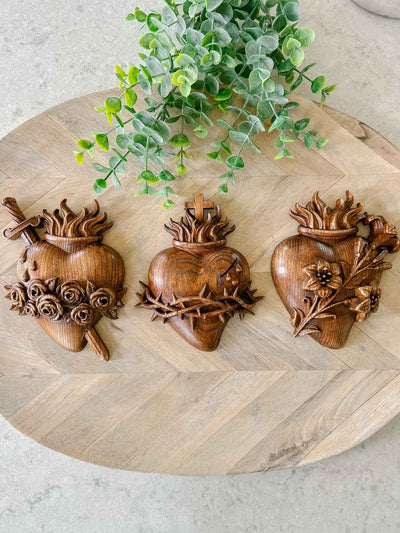
Religious objects may be blessed for devotional use. Their purpose is to direct attention beyond the object toward Christ, Mary, the saints and the mysteries of faith.
Rosaries & Other Devotional Objects
The Catechism names the rosary, medals, pilgrimages and Stations of the Cross among the forms of popular piety that surround the Church's sacramental life. These objects and practices are often blessed and used sacramentally.
Not every religious object sitting on a store shelf should be spoken of as though it were automatically a sacramental simply because it looks Catholic. Blessing and devotional use matter. The Church's categories are richer and more careful than the idea that an object acquires spiritual power merely by its appearance.
Why Does Catholicism Use Sacramentals?
Because Christianity is not a religion that asks us to escape the material world.
God created the world and called it good. Even more astonishingly, the eternal Son took on a human body. Christ touched the sick, ate with His disciples, used ordinary material things in His ministry and gave the Church sacraments that employ water, oil, bread and wine.
The Catholic instinct to use physical reminders of spiritual realities grows naturally from this incarnational faith.
It helps turn us toward the One who is.
A crucifix can call Calvary to mind. Holy water can remind us of Baptism. A medal can prompt a prayer. A rosary can place the mysteries of Christ into our hands one bead at a time.
What Does It Mean to Have an Object Blessed?
Every blessing begins with God. The Catechism says that blessings praise God and pray for His gifts.
When a priest or deacon blesses a devotional object according to the Church's rites, the point is not to hide a spiritual force inside the material. The blessing places the object's use within the prayer of the Church and directs it toward the sanctification of the person using it.
This is why a Catholic medal may be worn before it is blessed, yet having it blessed remains a beautiful practice. Our complete guide, Do Catholic Medals Need to Be Blessed?, explains that question in greater detail.
Do Sacramentals Have Power?
They do not possess an independent power that can be controlled by the person using them.
A sacramental is not a talisman, lucky charm or spiritual insurance policy. The Christian does not trust holy water instead of God, or a medal instead of God, or a crucifix instead of God.
Superstition asks: What can this object make happen for me?
Faith asks: How can this sign help turn me toward God, prayer and a more faithful life?
That distinction is especially important with devotional medals. Read Why Do Catholics Wear Medals? for a fuller explanation of the place medals hold in Catholic devotion.
How Do Catholic Medals Fit Into Sacramental Life?
Medals have long belonged to Catholic popular devotion. A medal may depict Christ, Mary, a saint or a particular mystery and can become a recurring prompt to remember, pray and ask for intercession.
The Miraculous Medal, for example, carries a prayer to Mary and imagery centered on grace and redemption. The Saint Benedict Medal bears prayers centered on the Cross of Christ and the rejection of evil. The Four-Way Medal gathers several familiar Catholic devotions into one cruciform design.
When these objects are blessed and used devotionally, their meaning is not found in the metal itself. Their value lies in the way they serve a life of faith.
What Sacramentals Are Ultimately For
Most Christian lives are not lived in extraordinary moments. They unfold while waking children, making dinner, driving to work, caring for someone who is sick, walking into a difficult meeting, or trying to remember to pray before the day disappears.
Sacramentals meet us there.
A hand reaches for a crucifix. Fingers touch a medal. Holy water marks the Sign of the Cross. A rosary is picked up again after several neglected days.
None of these actions replaces conversion, prayer or the sacraments. At their best, they help call us back to all three.
For further reading: Catechism of the Catholic Church, §§1667–1676: Sacramentals and Popular Piety.
Explore Catholic Devotional Objects
Rosaries, crucifixes, holy water vessels and devotional jewelry can become tangible reminders to return to prayer and keep the mysteries of faith close.


Leave a comment